

This guide is authored by a senior food processing automation engineer with over 10 years of industry experience from ZLPH MACHINERY TECHNOLOGY CO., LTD., a leading provider of intelligent retort sterilization systems. It addresses a critical pain point faced by food manufacturers and plant engineers worldwide: inconsistent or incomplete sterilization results during batch processing, which can compromise product safety, shelf life, and regulatory compliance.

Inconsistent sterilization in pilot or full-scale retort autoclaves has long plagued the canned food, ready-to-eat meal, and pet food industries. The core causes typically include uneven heat distribution, improper loading patterns, inadequate process control, and outdated equipment design. Drawing on more than 5,000 global installations and extensive R&D validation, we’ve developed a proven, step-by-step methodology to eliminate these issues—ensuring uniform lethality (F₀ value), preserving product quality, and meeting FDA, EU, and Codex Alimentarius standards. This guide breaks down real-world scenarios, root causes, actionable fixes, and field-validated results to help you achieve reliable, repeatable sterilization outcomes every cycle.

How to Ensure Uniform Heat Distribution in Water Spray Retort Autoclaves?
1. Scenario & Pain Point
In facilities producing canned vegetables or meat-based meals, operators often observe under-sterilized zones (especially at the bottom or center of the basket) despite reaching target temperature and pressure. This leads to product recalls, shortened shelf life, and failed audits. The issue is most severe in large-capacity or manually loaded retorts where tray placement lacks standardization.

2. Root Cause Analysis
Three primary factors contribute: (1) Poor water spray nozzle layout causing dead zones; (2) Overloading or irregular stacking of retort trays blocking circulation; (3) Lack of real-time thermal mapping during validation, leading to unverified assumptions about heat penetration.

3. Step-by-Step Solution
Immediate Fix: Reorganize loading using standardized retort trays with uniform spacing; avoid mixing product types or container sizes in one batch.
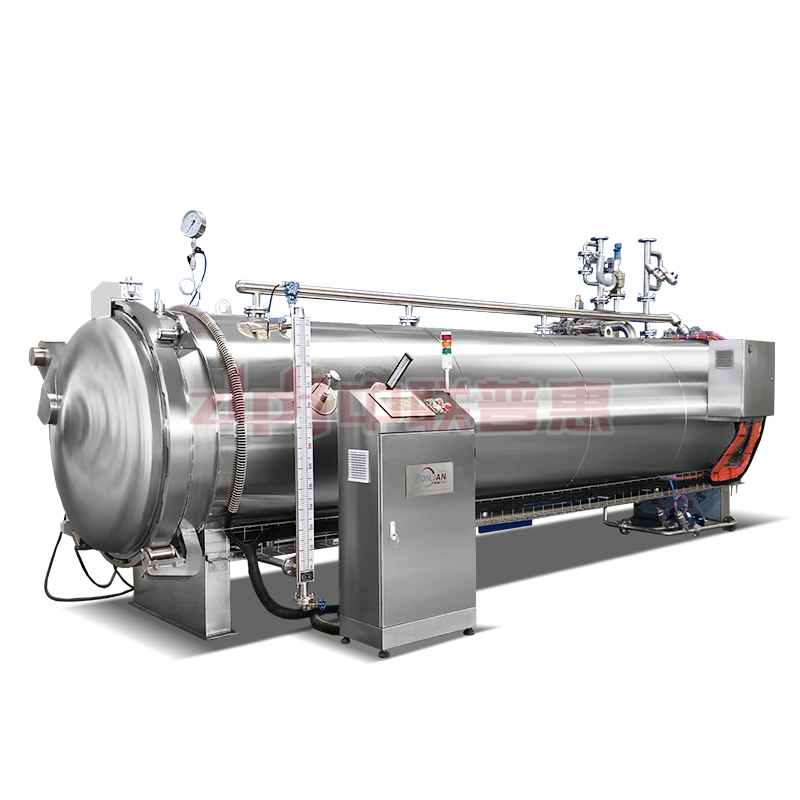
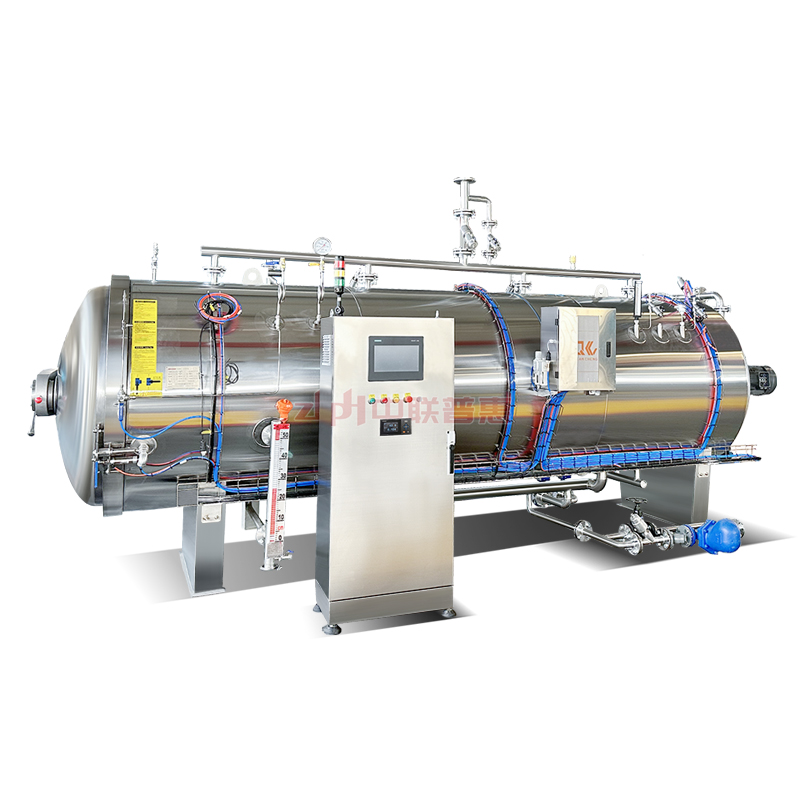
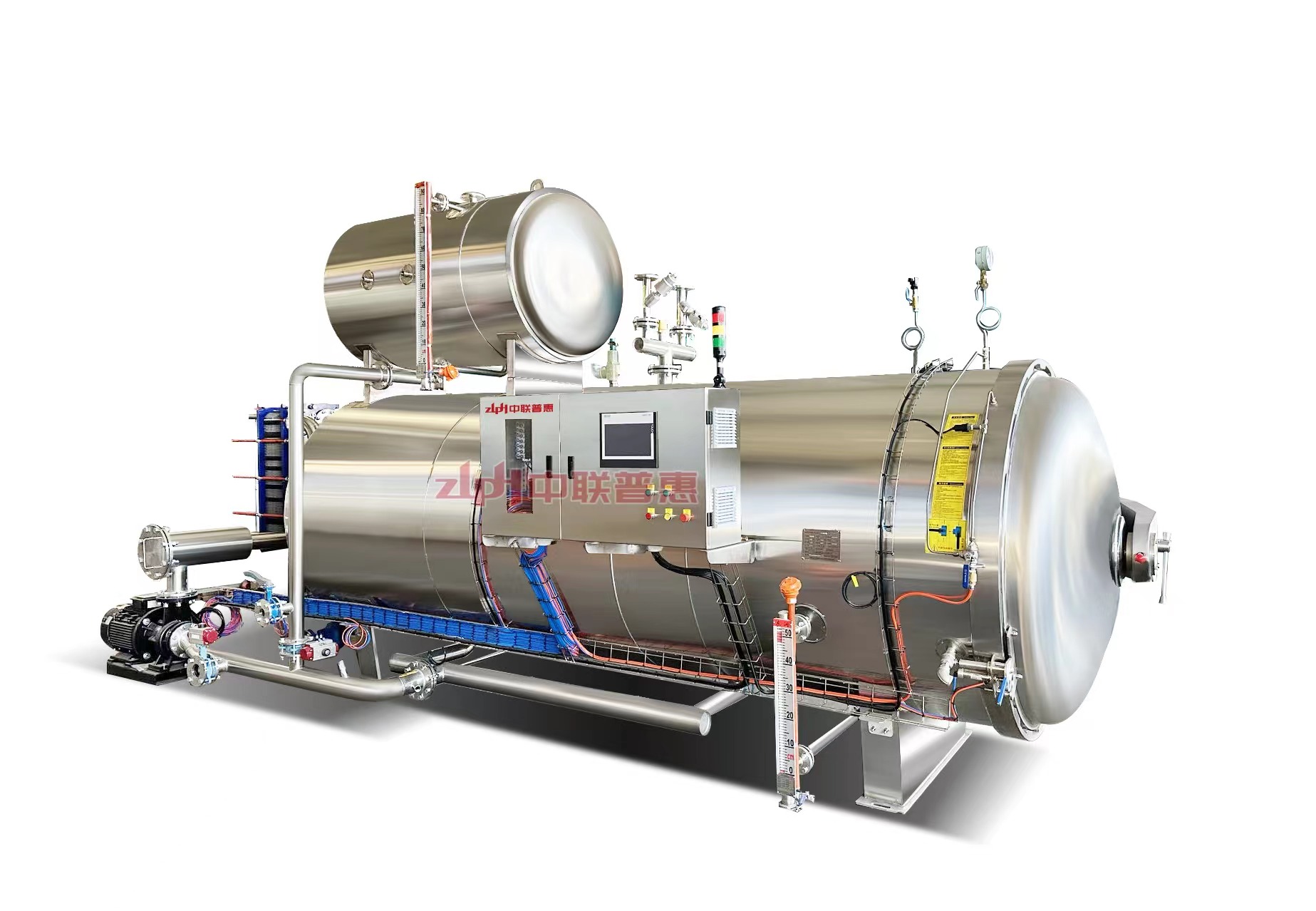
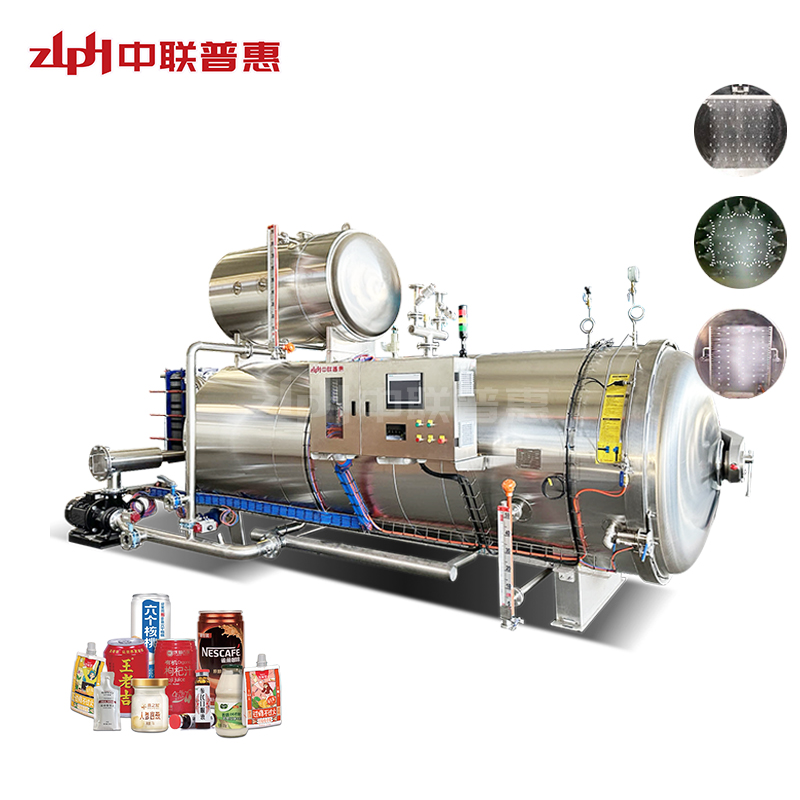
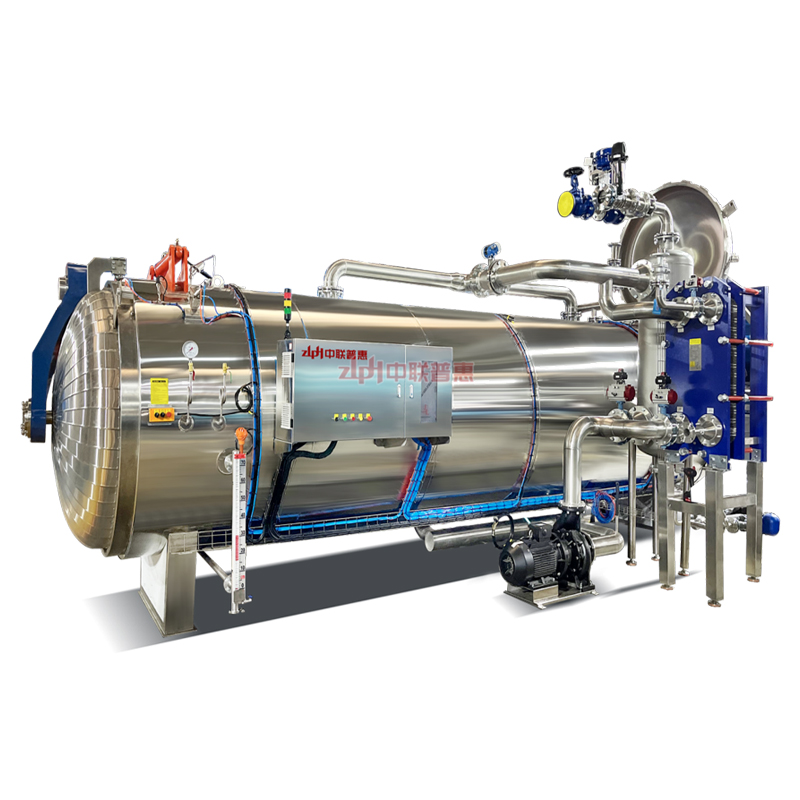
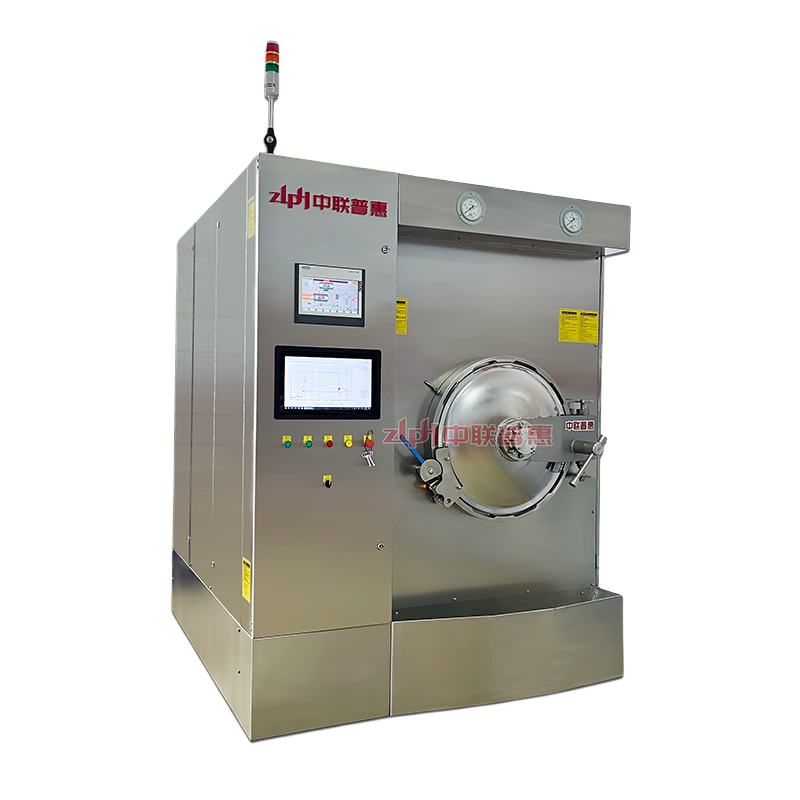
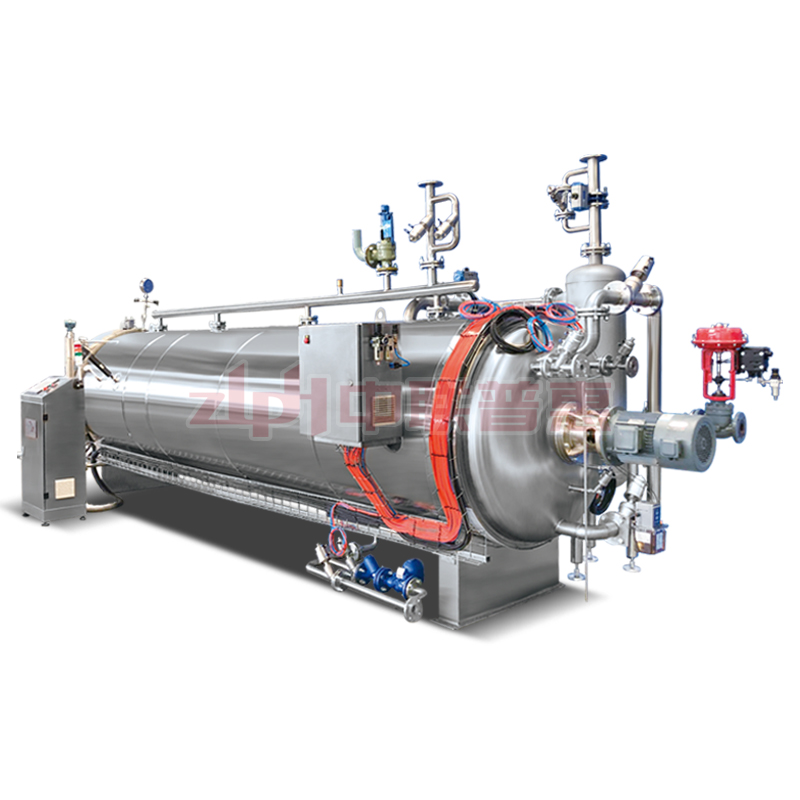
Long-Term Fix: Deploy an intelligent top-opening water spray retort equipped with multi-zone spray nozzles and CFD-optimized flow paths. Our system ensures ±0.5°C temperature uniformity across the chamber via synchronized top/bottom/side spray arrays.
Process Validation: Conduct thermal mapping with data loggers in worst-case positions (cold spots) during qualification runs to verify F₀ consistency.
4. Troubleshooting & Prevention Tips
Always validate new product formats with thermal profiling before full production. Never exceed 85% chamber fill rate. Use automated loader-unloader systems to maintain consistent tray alignment—manual handling introduces variability.
5. Field Validation Results
At a major European ready-meal producer, switching to our water spray retort with intelligent loading reduced cold-spot variance by 92%, achieving F₀ ≥ 3.0 consistently across all 120 trays per cycle. Product rejection rates dropped from 4.7% to 0.2% within three months.
How to Prevent Operator Errors in Manual Retort Loading?
1. Scenario & Pain Point
In emerging markets, small-to-mid-sized canneries rely on manual loading, leading to inconsistent tray stacking, blocked vents, or misaligned lids—causing steam channeling, pressure leaks, or incomplete sterilization.
2. Root Cause Analysis
Human error due to fatigue, lack of training, or absence of loading jigs. Traditional side-door retorts require awkward bending and visual estimation, increasing variability.
3. Step-by-Step Solution
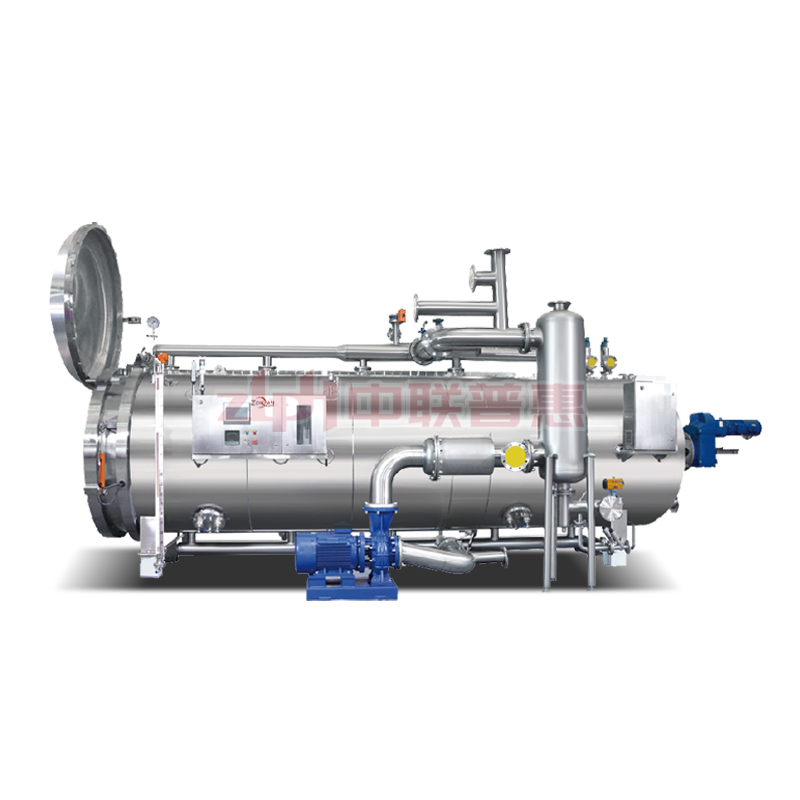
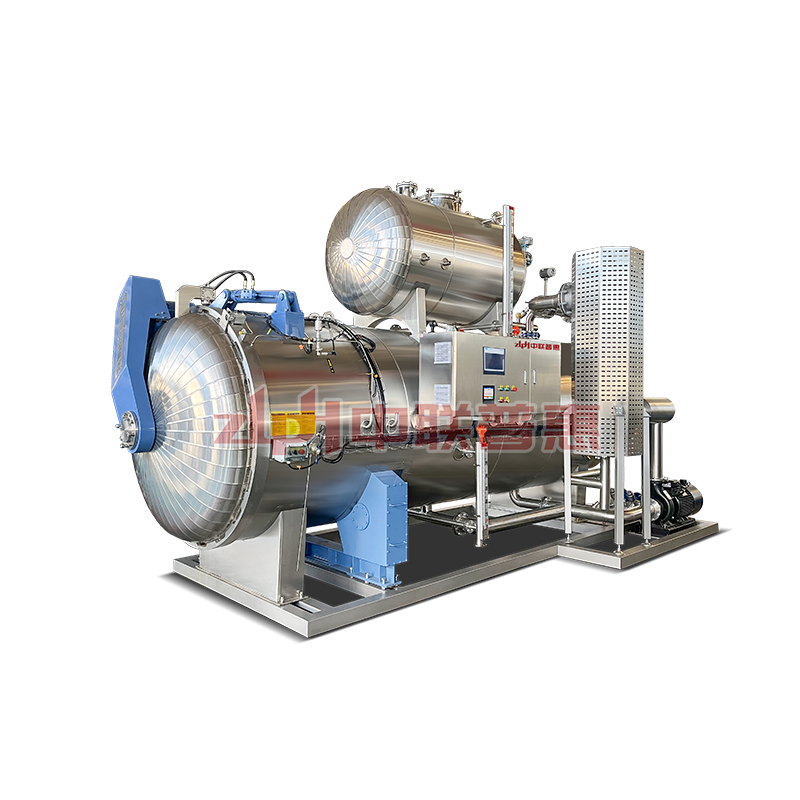
Adopt an upper-door design retort with vertical loading—improving ergonomics and visibility. Pair it with a semi-automated tray loader/unloader that enforces fixed positioning. Our system reduces loading time by 40% while eliminating misalignment.
4. Troubleshooting & Prevention Tips
Implement color-coded tray guides and conduct weekly operator competency checks. Never allow mixed-height containers without spacer frames.
5. Field Validation Results
A Southeast Asian tuna processor reduced loading-related sterilization failures by 88% after deploying our upper-door retort with guided tray system, cutting reprocessing costs by $18,000/month.
Industry Best Practices for Reliable Retort Sterilization
Based on 6+ years of global project execution, we recommend this 5-step framework:
1. Define Worst-Case Conditions: Validate using the slowest-heating product in the largest container.
2. Standardize Loading Protocols: Use fixed racks, never free-stack.
3. Monitor in Real Time: Integrate PLC-controlled systems that log T/P/F₀ continuously.
4. Automate Where Possible: Loader-unloader systems reduce human-induced variance.
5. Recertify Annually: Re-run thermal mapping after any process change.
Best Practice Principles:
- Always design for the harshest seasonal conditions (e.g., summer ambient temps).
- Choose suppliers with in-house sterilization process researchers—not just machine builders.
- Demand CE, ISO 9001, and ASME certification for pressure vessels.
Frequently Asked Questions (FAQ)
Q: Can I use a standard steam retort for low-acid canned foods (LACF)?
A: Only if validated with proper F₀ calculation and thermal mapping. Water spray or steam-air mix systems offer better control for dense products like meats.
Q: How often should I recalibrate retort temperature sensors?
A: Every 6 months minimum, or after 500 cycles—whichever comes first—to comply with FDA 21 CFR Part 113.
Q: Does your retort support integration with factory MES systems?
A: Yes, our PLC systems offer Modbus TCP, Profinet, and OPC UA interfaces for real-time OEE and batch traceability.
Q: What’s the minimum chamber size for pilot-scale validation?
A: Our smallest pilot retort holds 6–12 trays (300–600L), ideal for R&D and regulatory submissions.
Q: Are your systems compliant with Russian GOST or EAEU TR CU 021/2011?
A: Yes—all units exported to Russia since AGROPRODASH 2023 carry EAC certification.
About Our Expertise & Support
ZLPH MACHINERY TECHNOLOGY CO., LTD. is a globally recognized provider of advanced retort sterilization solutions, established in 2018. We operate a 50-acre manufacturing facility with 15,000m² of workshop space, housing precision CNC, welding, and pressure-testing bays. Our team includes 21 mechanical/PLC engineers, 4 sterilization process specialists, and 14 after-sales technicians—all with 10+ years in food thermal processing.
We’ve delivered over 1,200 retort systems to 40+ countries, including projects showcased at AGROPRODASH 2023 in Moscow. Our clients include multinational food brands and government-certified canneries requiring USDA/FDA-compliant validation.
Custom Solution Support Includes:
- On-site thermal process validation
- Custom chamber sizing for unique container formats
- Remote PLC diagnostics and parameter optimization
- Free pilot testing with your actual product samples
Contact Information
Company: ZLPH MACHINERY TECHNOLOGY CO., LTD.
Website: https://www.zlphretort.com/
Email: sales@zlphretort.com
Phone / WhatsApp: +86 15666798389 / +86 13361554016
